How to get the most from your event photographer
- 5 mins
Hiring a professional event photographer is only the first step in getting great photos of your event.
Over the years, I’ve worked on events of varying sizes, from unpredictable one-off events to the multi-day events like Yorkshire Balloon Fiestas.
In this post, I’m going to highlight some of the key things you can do as an event organiser or marketer to get the most out of hiring a photographer like me for your event.
In this post:
What is the purpose of photographing your event?
This is probably the most important question to ask before booking a photographer for your event. It’s possible that not every event NEEDS a professional photographer.
There are five main reasons for wanting to hire a professional photographer for your event:
- To document the event
- To share photos with attendees
- To promote future events
- To promote the rest of this event
- To accompany a press release
Let me share with you a couple of examples that fit these five reasons:
An employee conference
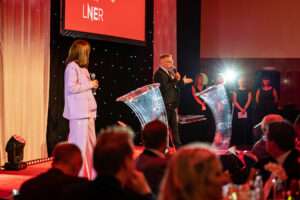
If you’re organising an employee conference to celebrate the successes of the year, you might want to document the event to look back on. You may want to capture images of employees at the event so they can post on LinkedIn. There may be VIPs, special guest speakers or senior leaders that you want to get photos of for internal comms or a press release.
A running/sporting event
If you’re organising a run or sporting event, you might want to capture as many individual runners as possible. These will then be shared with the attendees after the event for them to download – either free or for a charge – for them to post on social media. You might also want to capture some key shots to use to promote future events and for your own social media channels or press releases.
A multi-day festival
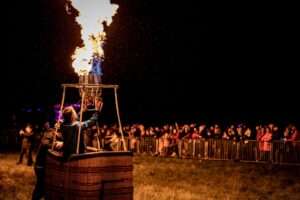
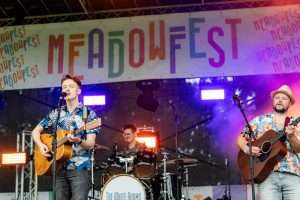
If you’re running a multi-day event like a music festival or an activity that runs over a half-term, you might want to get photos to highlight key aspects of the event to use in marketing and press releases to promote the rest of the event. For example, Yorkshire Balloon Fiesta is a multi-day event where I covered all of the days, capturing every angle of the event.
These photos were used in press coverage at the start and end of the event, as well as being posted during the whole event on the event’s social media channels. I even went one step further and was able to share images with acts at the event who then posted them on social media, further promoting the event.
These photos were then used to promote the event the following year.
Most events will have two or three reasons for getting photos at them. Making sure your reason for wanting professional photos is clear to you before hiring a professional photographer to shoot your event will help you get the best photos you need.
What are your must have photos?
Once you know the purpose of having a professional photographer at your event you can move on to knowing what photos you need.
A washy brief of “just capture a bit of everything” tends to leave the photographer wondering “what is important to the client”. Whilst experienced event photographers like me will be able to decipher and spot the important shots, to avoid disappointment, you should make it as clear as possible what photos you want.
Whether there are specific VIPs at the event or there’s a specific activity coming back next year you want photos of, these are things your photographer would need to know.
Events are usually busy and fast-paced. It can often mean a photographer needs to be in two places at once if they want to capture everything. By knowing your priorities and key shots, I can prioritise those over capturing a fringe part of the event. This way, you won’t be disappointed when a shot you wanted or needed is missing.
Where will your images be used?
We know the Why and the What, so now it’s time to know the Where.
Similar to the purpose, understanding where your images will be used will help in choosing what to capture, the framing and composition of the photos and how to edit them.
For example, if you want lots of images to use in Instagram Stories or to put into a Reel or TikTok, you might want lots of your images to be taken in portrait or with lots of space around the subject so they can be cropped in.
For press images, the style of how I frame and edit the shot will differ from how I do this for social media.
If the images are going to be used on your website or in print or OOH (out of home advertising like billboards and digital screens), I can plan to leave space where you can add copy and QR codes to it.
As I’ve already mentioned in the purpose, if the images are likely to be shared with attendees to use, I might have to prioritise getting photos of individuals or small groups of attendees rather than whole crowds.
If your sponsor, partners or exhibitors are planning to use the photos, then I might have to plan to capture strong images of them, too.
Between the What, Why and the Where, I’m able to put together a shot list to work through so that I capture the most important parts of your event and that the photos are fit for each use case you have for them.
What is your brand style?
Something that is often underrated in event photography is the brand style. The brand style goes beyond just a logo and the brand’s colours. Many large brands have specific style guides for photography that they share with photographers for shoots.
These photography style guides often outline the type of posing, lighting and editing style that go into the photos. This helps to keep images across the brand’s channels consistent.
If your brand or event doesn’t have a photography style guide, that’s okay, too. If you’ve had photos taken at previous events, I can match that style so that when sharing photos to promote an event, using older photos with newer photos should flow naturally and not look too different.
If you’ve not run this event before or want a new style to previous years, you can also share examples of other photography for your brand or photography from other events you like and I can use those for inspiration, whilst shooting them my own way and taking photos that are uniquely yours.
Share the agenda and event logistics details
When talking about what photos you want of your event, I briefly talked about being in two places at once and prioritising the “must-have” shots. Getting a detailed agenda or itinerary for the day is the best thing you can give an event photographer. Knowing what is happening, when and where is key to making sure I can be in the right place at the right time.
The best laid plans can go a bit off course, I know. That’s why it’s best to keep me in the loop during the day as well. Whether that’s adding me to a WhatsApp group or giving me a radio, you can easily make me aware of any schedule changes or if something spontaneous is happening where there’s a photo opportunity.
Outside of the agenda, there are a few key bits of information I need to even get to the event on time, make sure I’m following all of the rules and that I’m as prepared as possible to get the best shots. These are some of the questions I’m likely to ask before the event.
- Location of the venue and which part of it do I go to gain entry?
- Is there parking nearby or at the venue? Do I need to pre-register a vehicle?
- Do I need ID to access the venue?
- What time can I access the venue? It’s helpful to get my bearings to help me navigate larger venues
Once at the venue, there are also key bits of information I’ll need like:
- Do I need to wear hi-vis or should I blend in more?
- Do I need a specific pass to access areas like backstage, the pit or onstage?
- Are there any restricted areas?
- Do any speakers, performers or VIPs have specific requests or restrictions around photography?
- Is flash photography allowed or should it be avoided?
These sound like simple – and quite boring – questions, but knowing these will help things go smoothly on the day.
Introduce the wider team
When shooting an event, whilst I might be shooting alone for a lot of the time, it’s important for me, and for event organisers, to remember that I’m part of the wider event team.
Knowing who is part of this team can be really helpful for getting quick answers to questions, photographing efficiently and making sure nothing goes wrong. Some of the key people it’s useful to introduce to each other and your photographer are:
- The event coordinator and their backup – The person who is running the day, and someone else with delegated authority in case they’re not available
- Your marketing team or agency – Helpful to speak to so I can get any of their requirements
- Your social media team or content creators – I can get specific shots to support content they’re planning, as well as making sure I stay out of their way when possible
- Your PR team or agency – Again, they may have a specific shot in mind on the day they really need. They’re also great at introducing me to VIPs for organising photos
- Videographers – The last thing you need is the back of my head in every single video. If you’re hiring a videographer, introduce us as early as possible so that we can understand each other’s briefs and plans. This might also impact my use of flash
- Other photographers – Some events are so big that they require more than one photographer, or other attendees may choose to bring their own. Photographers are friendly, social creatures. It would be great to speak before the event so that we can coordinate what we’re going to shoot
This isn’t an exhaustive list. Anyone you think might help me get the best photos for you, feel free to introduce us.
Agree delivery timings, format and usage rights
One thing that often isn’t talked about until it’s too late are delivery timings, file format and sizing and usage rights. These aren’t the fun, sexy parts of photography, but they’re essential to discuss.
Delivery timeline
Delivery timing expectations are important to set up from the beginning. It’s not uncommon to shoot 2,000+ photos in one event, so whilst I offer flexibility in timelines, I also want to be realistic about what is possible.
Depending on the event, I can usually deliver a small number of edited photos at the end of the day for social media and press. If needed, and time allows, I can sometimes get a small number of photos edited during the day that can be shared on social media during the event.
For the rest of the fully edited images, let me know what your requirements are and I can work with you on that.
Delivery
Once all of the images are fully edited, they will be provided in an online password protected gallery where you can view and download them. They will remain there for 30 days before archiving. For events where attendees need to access the photos and download them, let me know so that I can set up the gallery accordingly.
For photos during the event, I’m able to share images through WhatsApp or Apple’s AirDrop. That is the quickest method I’ve found for sharing images from my mobile editing set up.
Image format, sizes and ratios
I deliver all of my images as JPGs in a medium file size, suitable for social media and for most print. For web, some clients like to compress images themselves, but I can also provide web-ready images for you to upload straight away.
Similarly for social media, especially Instagram, or for a web banner, you might want a specific image ratio. If this is the case, let me know these ahead of time. I can shoot with these crops in mind and then provide them ready to use straight away – no editing, cropping or compressing required by you.
If you want a larger file size for something like a huge billboard or poster, just let me know the specific photos you want and I can share a full res version for those images.
Usage rights
Usage rights are simply the rights you or others have to use photography that you have been given permission to use, either through buying them from a stock website or through hiring a photographer.
I try to keep usage rights as simple as possible. Get in touch with me so that I can understand your requirements and share details about my standard and extended licenses.
Involve your photographer earlier in the planning process
Photographers are often brought in after most of the event plans are already in place. But if you involve them a little earlier, they can help you make small adjustments that improve the photos you’ll end up using everywhere.
That could be something as simple as:
Repositioning a branded backdrop so it’s more visible in group shots
Spotting a lighting issue that might affect how your photos turn out
Suggesting changes to the event layout that make key moments easier to capture
A good photographer will work with what they’re given, but by making a few tweaks, it could help you get the best out of them.
If you’re already investing in professional photography, it makes sense to get the most out of it. Giving your photographer a seat at the table just a little earlier can help you do exactly that.
Final thoughts
Organising and managing an event can be stressful. I want to make sure hiring an event photographer is the simplest part for you. By using this post as a guide, it will make your experience with a photographer much easier.
If you want to work with me, I’ll help you through this process so that you have even less to worry about.
Take a look through my event portfolio and then use the contact form on my website to get in touch with me. If you have any more questions about event photography, I’d be more than happy to answer them for you.
Let’s bring your event to life
Planning an event and need a photographer who can capture its true spirit? Get in touch for a quick quote or to discuss your needs.
My past event photography